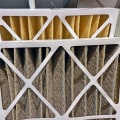
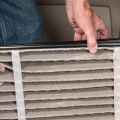
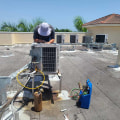
A dusty house in Winter Garden is usually a duct problem, not a filter problem. We've found this consistently across Horizon West and Waterleigh: flex duct connectors pull apart at elbows and branch takeoffs, and the system stops delivering conditioned air to rooms and starts pulling from the attic instead. That attic air carries insulation particles, accumulated dust, and Central Florida's year-round pollen load through every register in the house each time the system runs.
We work on duct systems throughout Orange County, and the pattern we see most often in Winter Garden's newer construction is exactly that: connections that have quietly separated at the joints. It happens gradually. Homeowners don't notice until utility bills start climbing or a bedroom stops cooling to temperature.
TL;DR Quick Answers
air duct repair in Winter Garden
Air duct repair in Winter Garden addresses leaks, separations, and deteriorated sections in the duct systems that deliver conditioned air through your home. Most homes in Winter Garden use flexible ductwork routed through unconditioned attic spaces — connector points at elbows and branch takeoffs are the most common failure location in Orange County's heat and humidity.
Common signs your ducts need repair:
Dust returning to surfaces within days of cleaning
Rooms that won't cool to temperature
Unexplained increases in your Duke Energy or OUC bill
Stale or musty air from registers
Common repair types: mastic sealant application, metal foil tape, flex duct reconnection, and section replacement.
Florida requires a licensed HVAC contractor to perform duct repair work. Verify credentials at MyFloridaLicense.com before scheduling service.
Top Takeaways
Duct leaks are common in Winter Garden's post-2000 construction. Flex duct systems are standard in these builds, and connector points at elbows and branch takeoffs are the first to go.
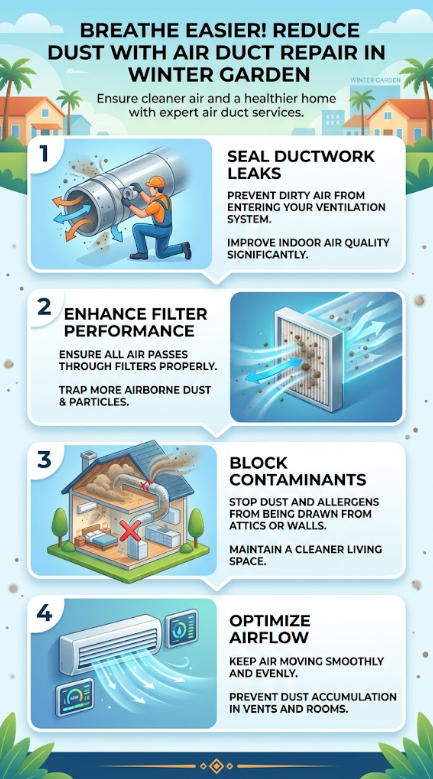
Leaky ducts don't just waste energy. They pull dust, pollen, and insulation particles from unconditioned attic spaces and send them through every register in your home.
Orange County's humidity and year-round cooling demand speed up seal degradation and can produce condensation and mold growth inside attic-routed ductwork.
Most residential duct repairs are targeted fixes: sealing connector points, applying mastic, or replacing a degraded section. A full system overhaul is rarely what's needed.
Florida requires licensed contractors to perform HVAC work. Homeowners can verify credentials at MyFloridaLicense.com before booking any service.
What Leaky Ducts Do to a Winter Garden Home
Many homeowners who call us about dust problems in Winter Garden have already changed their air filters twice. The filter wasn't the issue. Leaking ducts were pulling air from unconditioned attic spaces and sending it through the supply registers, particulate and all.
When supply or return ducts develop gaps at connector points or along flex duct runs, the system begins pulling air from wherever it can. In Winter Garden's post-2000 neighborhoods, that means attics, wall cavities, and spaces that haven't been cleaned in years. That air carries insulation fibers, accumulated dust, mold spores, and Central Florida's considerable pollen load. Every time the system cycles, it distributes that through every register in the house.
The energy loss is its own problem. Leaking conditioned air into an attic doesn't cool a room. It runs up your Duke Energy or OUC bill. In Orange County, where the cooling season runs for most of the calendar year, that adds up fast. We've seen homes where duct issues accounted for a meaningful portion of monthly utility costs, and the homeowners had no idea the ductwork was the cause.
Moisture is the third factor. Central Florida's humidity means air escaping into attic-routed duct joints carries moisture with it. Over time, that creates conditions for condensation inside duct connections and, in some cases, microbial growth in wall cavities and insulation near the leak points.
What Air Duct Repair Actually Involves
What we do on a repair call depends on where the problem is and what caused it. These are the most common repair types we handle in Winter Garden homes:
Mastic Sealant Application
For leaks at seams and joints in metal duct runs, mastic sealant is the right material. It bonds firmly to the surface and flexes as the duct expands and contracts with temperature changes. Standard duct tape won't hold through those cycles. We apply mastic to clean, dry surfaces and let it cure fully before restoring airflow.
Metal Foil Tape
Metal foil tape seals small gaps in rigid metal ductwork and holds under the pressure differential HVAC systems generate. Surface prep matters here. We clean the area before application to get the adhesion a lasting seal requires.
Flex Duct Reconnection and Resecuring
Flexible ductwork is standard in most Winter Garden homes built over the past two decades. Connector points are the most common failure location. Elbows and branch takeoffs pull apart gradually, especially in attic spaces where temperature swings are significant. We reconnect separated sections, secure them properly, and verify airflow is restored to the affected rooms before we leave.
Section Replacement
When a section of ductwork has deteriorated past the point of sealing, we replace it entirely. This covers torn or kinked flex duct, collapsed inner liner, and sections crushed by stored items in attic spaces. We match the replacement material to the existing system for consistent airflow and seal the new connections with mastic.
Residential and Commercial Duct Repair in Winter Garden
On the residential side, most calls in Winter Garden involve the flex duct systems standard across master-planned communities built over the past two decades. Connector points loosen with time, and attic heat accelerates material degradation in ways that aren't visible from inside the home. Our residential inspections start in the attic. That's where most of the problem points are.
Commercial duct systems along the West Colonial Drive corridor tend to be larger-diameter metal runs with more complex branching. Repairs in those settings require Orange County commercial permits and need to meet applicable building code standards. We handle the permitting process and coordinate inspections so the work clears code the first time.
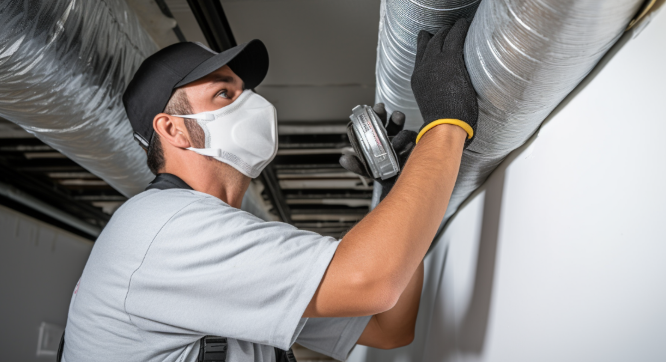
"Attic temperatures in Central Florida can exceed 140 degrees in peak summer, and flex duct connector points aren't designed to hold indefinitely under that kind of heat cycling — in our experience, most Winter Garden homes with unresolved dust or cooling complaints have at least one separation we can find within the first ten minutes in the attic."
Essential Resources
These seven resources cover the decision homeowners face before booking any duct work: whether the problem is real, what the health and energy stakes are, how to evaluate a contractor, and what Orange County requires before work begins. Each one comes from a verified primary source.
1. How to Confirm Whether Your Home Actually Needs Air Duct Service
The EPA's consumer guide on air duct cleaning identifies the specific conditions that justify professional duct service, the symptoms that point to real problems, and the situations where a homeowner is better off skipping it. Reading this before calling a contractor means you go into the conversation knowing what to look for rather than relying on a sales pitch.
Source: Should You Have the Air Ducts in Your Home Cleaned? — U.S. EPA
URL: https://www.epa.gov/indoor-air-quality-iaq/should-you-have-air-ducts-your-home-cleaned
2. What Compromised Ductwork Does to the Air Your Family Breathes
The EPA's indoor air quality overview explains how leaky duct systems allow contaminants from unconditioned spaces to enter the home's air supply, and why high-humidity environments like Orange County accelerate that risk. This is the resource for homeowners connecting persistent dust and air quality issues to a potential duct problem.
Source: Introduction to Indoor Air Quality — U.S. Environmental Protection Agency
URL: https://www.epa.gov/indoor-air-quality-iaq/introduction-indoor-air-quality
3. How Much Energy Leaky Ducts Cost You — and What Repair Can Recover
ENERGY STAR documents that homes with duct leaks typically lose 20 to 30 percent of conditioned air before it reaches its destination, and that sealing those leaks can recover up to 20 percent of system efficiency. For a Winter Garden home running air conditioning through most of the year, this page puts a measurable dollar frame around the repair decision.
Source: Duct Sealing — ENERGY STAR, U.S. Department of Energy
URL: https://www.energystar.gov/saveathome/heating-cooling/duct-sealing
4. What Is Actually Happening in Your Duct System When It Underperforms
The Department of Energy's technical resource on duct energy loss explains how supply and return leaks behave differently, what signs homeowners can look for before calling a technician, and what a qualified professional should inspect. It's especially relevant for Winter Garden homes with flex ductwork routed through unconditioned attic spaces, which is the standard configuration for most post-2000 construction in the area.
Source: Minimizing Energy Losses in Ducts — U.S. Department of Energy
URL: https://www.energy.gov/energysaver/minimizing-energy-losses-ducts
5. How to Identify a Qualified HVAC Duct Contractor and Avoid Low-Quality Operators
NADCA is the trade association that sets industry standards for HVAC inspection, cleaning, and restoration. Their homeowner hub covers what legitimate duct work looks like, what to ask a contractor before the job starts, how to spot common scams in the duct service industry, and what the difference is between a certified technician and one who isn't. This is the reference that protects homeowners from the low-cost operators who dominate search results in this service category.
Source: Homeowners — National Air Duct Cleaners Association (NADCA)
URL: https://nadca.com/homeowners
6. How to Verify Any HVAC Contractor's Florida License Before Work Begins
Florida law requires licensed contractors to perform HVAC work, and a contract with an unlicensed operator is legally unenforceable. The Florida DBPR's verification portal lets homeowners search any contractor's license status, license type, and disciplinary history in under two minutes. We consider this check non-negotiable before any contractor enters a home, and this resource makes it straightforward to do.
Source: DBPR License Verification
URL: https://www2.myfloridalicense.com
7. When Orange County Requires a Permit for Duct Work — and What Happens If You Skip It
Orange County requires a mechanical permit for any HVAC work involving modification or extension of existing ductwork, and unpermitted work creates real complications at resale and during inspections. This page from Orange County's Division of Building Safety explains what triggers a permit requirement, how to apply through the county's Fast Track portal, and what inspections are required before work is considered complete. For any repair that goes beyond simple sealant application, homeowners should confirm permit requirements before work begins.
Source: Mechanical Permit — Orange County Division of Building Safety
URL: https://www.orangecountyfl.net/PermitsLicenses/Permits/MechanicalPermit.aspx
Supporting Statistics
Statistic 1 — How Much Time Your Family Spends in the Air Your Ducts Deliver
90% of time Americans spend indoors on average — where pollutant levels frequently exceed those found outside. (U.S. EPA)
We hear the same objection on almost every dust complaint: new filter, clean house, dust back in three days. The EPA's indoor air quality research explains why the indoor environment is where the problem concentrates.
What this means for Winter Garden homeowners:
Orange County heat and humidity keep windows closed from late spring through October. There is no passive air exchange to dilute what circulates inside.
What circulates comes through the duct system. The duct system is the only delivery mechanism for the air your family breathes indoors.
Active duct gaps pulling from attic spaces mean every system cycle redistributes insulation particles, accumulated dust, and pollen through every register in the house.
Source: Indoor Air Quality Exposure and Characterization Research — U.S. Environmental Protection Agency
URL: https://www.epa.gov/air-research/indoor-air-quality-exposure-and-characterization-research
Statistic 2 — What Is Actually Running Through Your Duct System Every Month
52% of a U.S. household's annual energy consumption goes to space heating and air conditioning — more than any other category. (U.S. EIA, 2020 RECS)
The most common question on a duct repair job is whether it's worth the cost. More than half of a household's annual energy moves through the duct system to get where it's going. That is the system in question.
What this means for Winter Garden homeowners:
With almost no heating load in this climate, that 52 percent is weighted almost entirely toward cooling. Duct performance is a cooling-season issue here, which means it runs for most of the year.
Homeowners watching Duke Energy or OUC bills climb without a clear explanation are often looking at duct leakage — not equipment failure.
The equipment is the first thing people suspect. The delivery system is usually the actual problem.
Source: Use of Energy in Homes — U.S. Energy Information Administration, 2020 Residential Energy Consumption Survey
URL: https://www.eia.gov/energyexplained/use-of-energy/homes.php
Statistic 3 — Why Duct Leakage Costs More in Florida Than Almost Anywhere Else
28% of total household site energy in Florida goes to air conditioning — more than three times the national average of 9 percent. (U.S. EIA, 2020 RECS)
The number that shifts the conversation most quickly with Florida homeowners: air conditioning accounts for 28 percent of total household site energy here versus 9 percent nationally. That gap changes the math on duct repair.
What this means for Winter Garden homeowners:
Florida's cooling energy burden is more than three times the national figure. The financial stakes of duct performance here are not the national norm.
A separated connector in a Winter Garden attic is not a minor inefficiency. It is the largest active energy loss in the house.
Homeowners who've delayed the inspection because it seemed like a secondary concern often recalibrate once they see this number. The decision looks different when the cooling load is this high.
Source: Space Heating Consumed the Most Energy of Any End Use — U.S. Energy Information Administration, 2020 Residential Energy Consumption Survey
URL: https://www.eia.gov/pressroom/releases/press535.php
Final Thoughts and Opinion
After working on HVAC systems throughout Orange County, our take on duct repair is consistent: most homes with persistent dust or uneven cooling have a duct problem somewhere in the system, and addressing it produces results that filter upgrades alone won't deliver. Winter Garden's housing stock, built predominantly during the 2000s and 2010s with flex duct systems routed through unconditioned attic spaces, is particularly prone to gradual connector loosening. It goes unnoticed until utility bills climb or rooms stop cooling to temperature.
The fix isn't always disruptive or expensive. A thorough inspection, reconnected flex duct sections, and proper mastic sealing at problem joints can restore meaningful system performance. What we'd rather homeowners avoid is spending money on equipment upgrades while the delivery system continues bleeding conditioned air into spaces that don't need it.
Central Florida's climate means your duct system works hard. Humidity accelerates seal degradation. Attic temperatures stress flex duct connectors. Year-round cooling demand means any inefficiency shows up on your utility bill every month. If the ductwork in your Winter Garden home has never been inspected and the system is more than a decade old, the inspection is worth doing regardless of whether a repair turns out to be necessary. In our experience, it usually is.
Frequently Asked Questions
What are the signs my air ducts need repair in Winter Garden?
The most common indicators are rooms that fail to cool evenly, dust that returns to surfaces quickly after cleaning, a noticeable increase in your Duke Energy or OUC bill without a usage change, and a stale or musty smell from your registers. Any of these can point to leaks, disconnections, or collapsed sections in your duct system. A pressure test and visual inspection by a licensed technician will confirm the issue.
How long does air duct repair take?
Most residential air duct repairs in Winter Garden take between two and four hours, depending on how many areas need attention and how accessible the ductwork is. Attic-routed flex duct systems can take longer if sections require full replacement. We give you an honest time estimate before we start.
Is duct repair worth it in Florida's climate?
In our view, yes, particularly in Orange County, where the cooling season runs for most of the year. Any conditioned air escaping through duct leaks represents money spent for no comfort benefit. Addressing duct leaks restores efficiency and improves room-by-room temperature consistency without requiring equipment replacement. The investment typically pays back in lower utility costs over subsequent billing cycles.
Can duct repair reduce my Duke Energy or OUC utility bill?
It can. ENERGY STAR data shows leaky ducts can reduce heating and cooling system efficiency by up to 20 percent. Homes where duct repairs correct meaningful leakage typically see improvement in utility costs in the billing cycles that follow. The more significant the prior leakage, the more noticeable the change.
What's the difference between duct sealing and duct cleaning?
Duct sealing fixes structural problems: gaps, cracks, and disconnected joints that let conditioned air escape before it reaches its destination. Duct cleaning removes accumulated debris from inside the duct interior. Both serve different purposes, and we assess your system first to determine which is appropriate, or whether both are warranted.
Reducing dust levels in your Winter Garden home starts with finding where your duct system is failing.
Schedule an inspection with our team and get a straight answer about what's driving the problem.
Here is the nearest branch location serving the Doral FL area…
Filterbuy HVAC Solutions - Miami FL
1300 S Miami Ave Unit 4806, Miami, FL 33130
(305) 306-5027